Erickson Water System Phase 1 Metering Project
Overview
The Regional District of Central Kootenay (RDCK) is installing water meters on all industrial, commercial, institutional, and large agricultural (5+ acre) properties connected to the Erickson Water System as part of Phase 1 of the Erickson Universal Water Metering Project.
This project is fully funded through senior government grants and represents a major step forward in improving water management, identifying and reducing leakage, and protecting the long-term sustainability of the Arrow Creek water supply. There are no planned changes to the the existing flat-rate billing structure in Erickson.
The water meters being installed leverage Advanced Metering Infrastructure (AMI) that enables remote collection of data and do not require utility personal to “read” the meters. These water meters are advanced devices that enable remote collection of water usage data in real time, allowing utilities to quickly identify excessive water use that may indicate leaks. Once installed, customers will be able to access near real-time water use information through the EyeOnWater platform, helping property owners better understand their consumption and detect leaks early.
Why Metering?
Water meters are one of the most effective tools for improving water efficiency and accountability.
The goals of metering in Erickson are to:
- Identify and reduce system leakage and optimize capital replacement planning by leveraging system data.
- Encourage conservation through greater awareness of water use.
- The introduction of universal metering in a water system greatly improves the potential for success when competing with other communities for future senior government infrastructure grant money.
- Better understand how water is used across sectors.
- Protect the Arrow Creek watershed, which continues to face environmental pressures and supply challenges during drought.
- By managing peak water demand and fixing leakage we can reduce wear and tear and extend the lifespan of critical water infrastructure.
Experience from other RDCK water systems shows that universal metering can reduce overall water use by 15–30 percent with combined with metered rates. When metering is introduced to a system but flat rate billing remains in place, reductions in water usage are typically less: 5 – 15% and attributed to early leak detection via AMI and behavioral changes in water usage driven by access to usage data and alerts.
About Phase 1
Phase 1 metering includes approximately 136 meter installations on:
- Industrial, commercial, and institutional (ICI) properties
- Agricultural properties with five or more acres of irrigation privilege
The current meter installation work is taking place through fall 2025, with brief water outages (typically an hour) expected during installation. Residents are notified 24–48 hours in advance through door tags and Voyent Alert notifications. Meter installations for Phase 1 will resume in spring 2026
Most meter pits will be installed within the public right-of-way, but in some cases, site conditions may require installation inside private property lines near the existing water service connection. Disturbed areas will be restored to their previous condition following installation.
Project Timeline
Planning & Design 2024 – 2025
- Securing grants, Site review, layout confirmation, competitive tender contractor award and coordination.
Installation (Phase 1) Summer 2025 to Spring 2026
- Meter pit installations and site restoration for ICI and agricultural properties.
EyeOnWater Launch – Throughout 2025 – 2026 (installation dependent)
- Customer access to online water-use monitoring (typically accessible 2-3 weeks after meter installation)
Phase 2 Implementation – Residential metering (506 connections) funded under the Provincial Metering Pilot Program 2025 – 2028
How to Stay Informed
Residents are encouraged to:
- Sign up for Voyent Alert! to receive installation notices, water quality advisories, information about maintenance activities, water conservation measures, and other public notices and system updates via text, phone, or email. You can Sign up for Voyent Alert here.(External link) by scrolling down the page to the “Water Notifications Service” section.
- Follow this Engage RDCK page to receive automatic email updates on construction progress, EyeOnWater rollout, and Phase 2 project milestones.
- Contact the Utility Services team for questions at:
WaterContact@rdck.bc.ca | 250-352-8161 or 1-800-268-7325 (ext. 8161)
Looking Ahead: Phase 2 – Universal Metering:
- Building on the success of Phase 1, the Province has awarded the RDCK $3.5 million in grant funding through the Provincial Water Meter Pilot Project to complete universal metering for all remaining residential properties in Erickson.
- Phase 2 will bring the total number of meters in the system to over 640, positioning Erickson as one of the first fully metered rural water systems in the Kootenays. This installation work will begin in 2026 and take approximately two years to complete
Questions and Feedback
- We welcome community questions and feedback throughout the project.
Use the “Ask a Question” tool below to connect directly with the project team or post your comments publicly. - You can also email WaterContact@rdck.bc.ca if you’d like a direct response or to discuss specific property issues.
Frequently Asked Questions
How will I be notified if a meter is being installed for my property? Will I experience a water outage, and if so, for how long?
The current meter installation work is taking place through fall 2025, with brief water outages (typically an hour) expected during installation. Residents are notified 24–48 hours in advance through door tags and Voyent Alert notifications.
Where are water meters being installed?
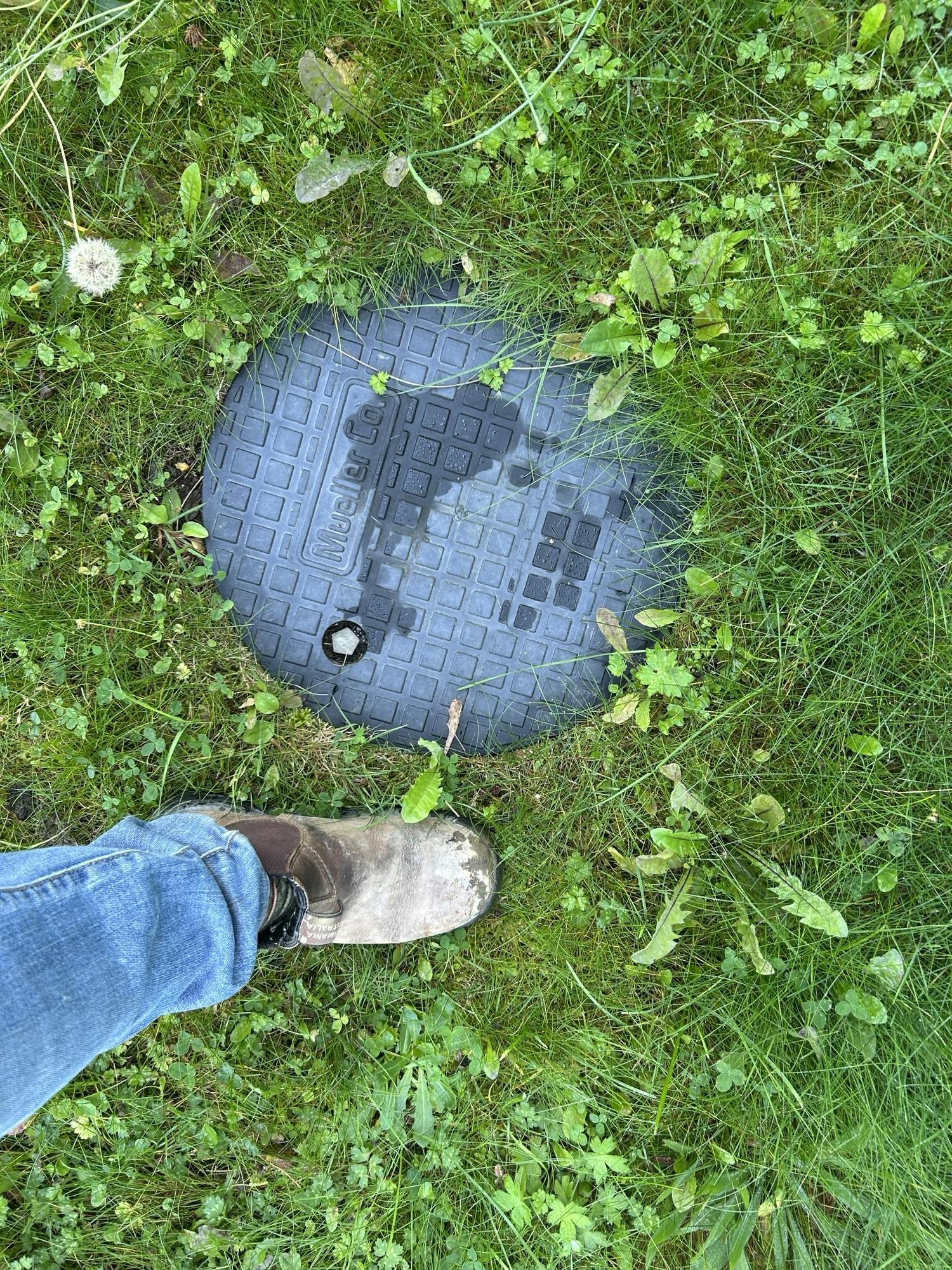
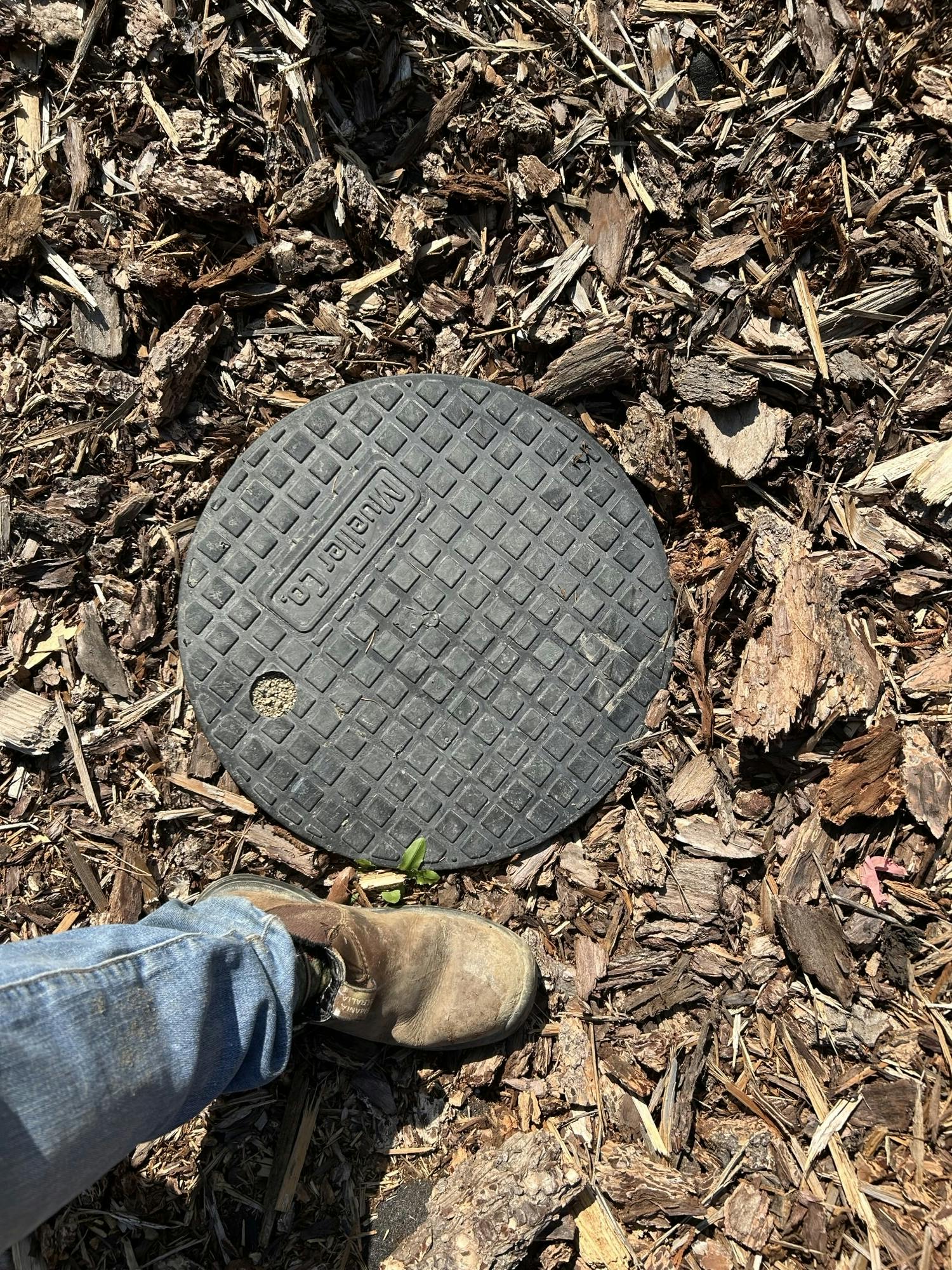
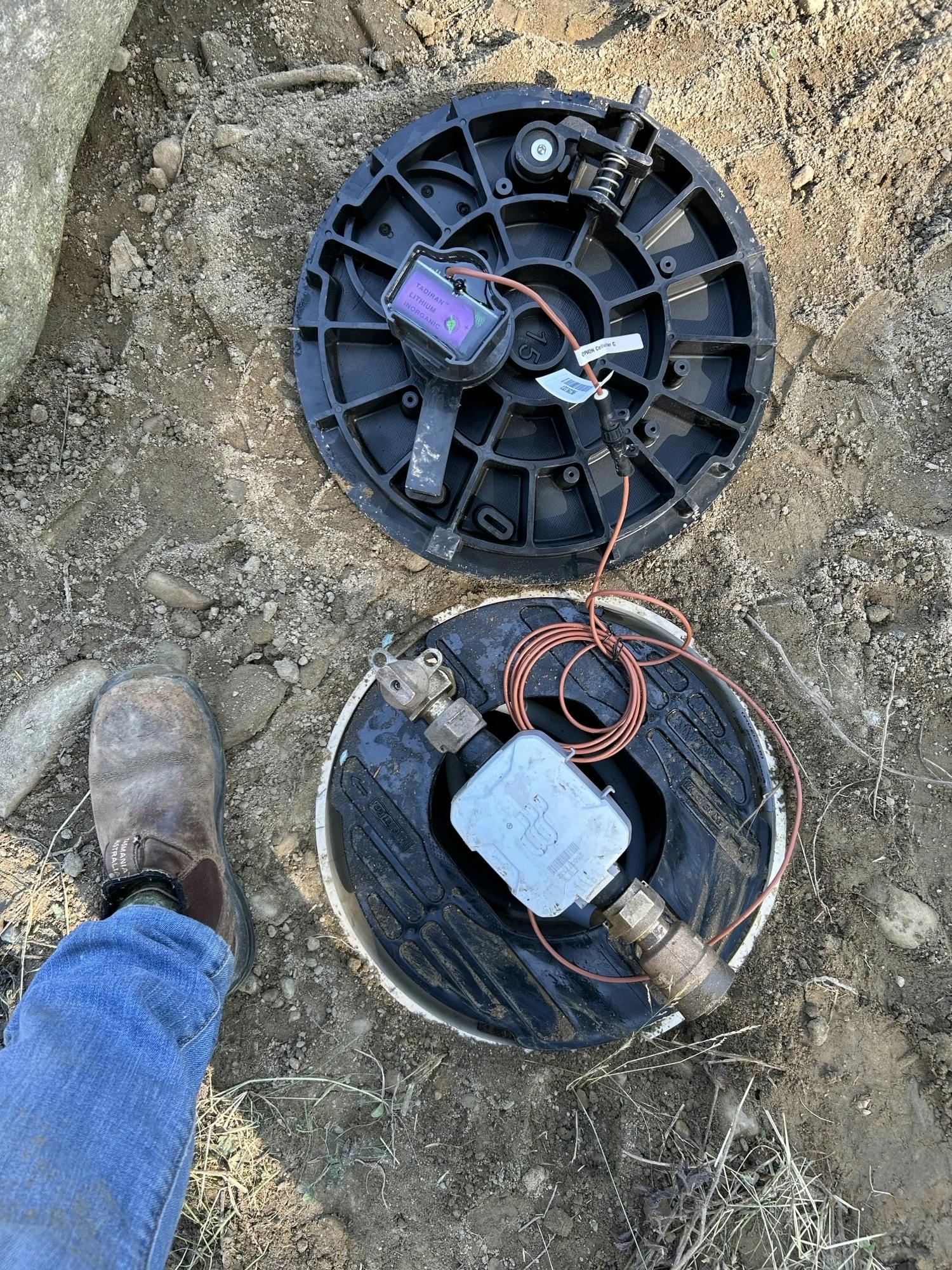
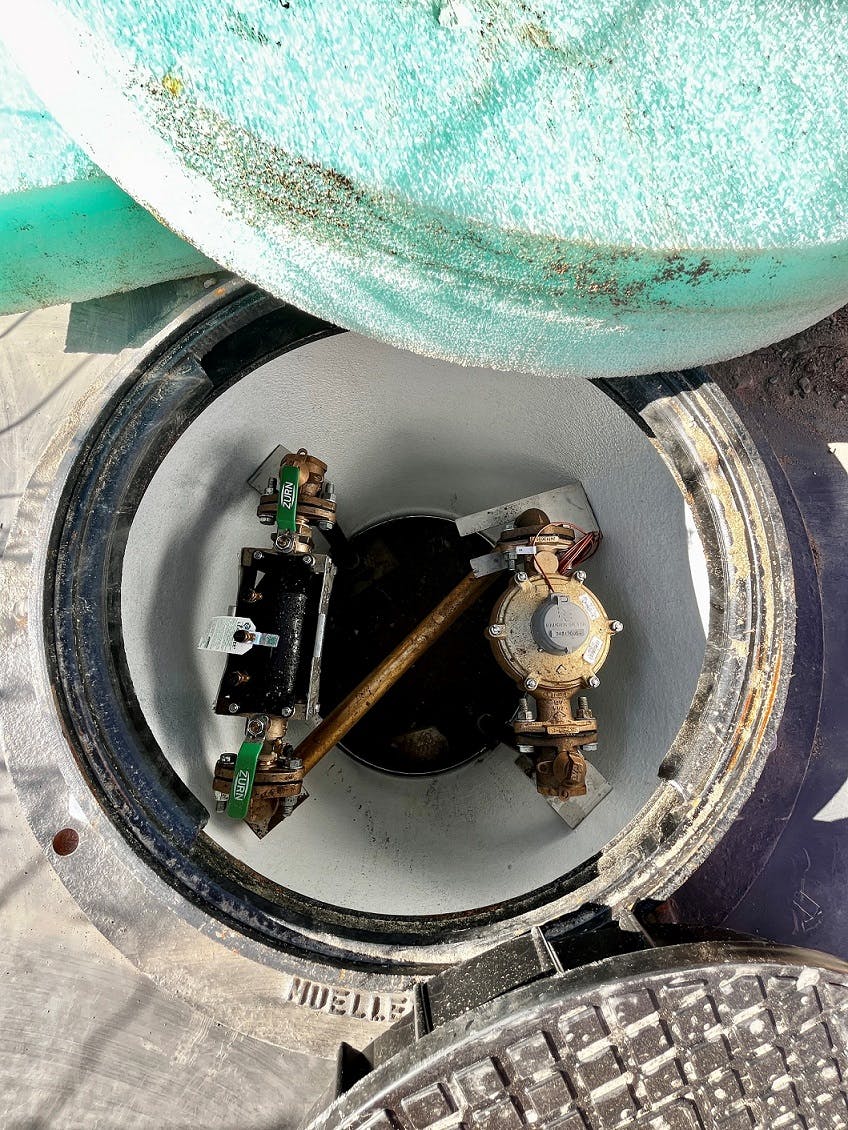
Water meters are being installed after the curb-stop in insulated meter pits, typically located at the property line. In some cases water meters must be installed within properties depending on the location of the curb-stop.
Why is my new water meter smaller than my existing service line - won't this restrict flow?
Understanding Meter Sizing and Flow Capacity
Some property owners have asked why the size of their new water meter may appear smaller than their existing service pipe — for example, a 1½-inch meter on a 2-inch service. It’s important to understand that meter size and service line size are not the same thing, and the installation of a smaller meter does not restrict the amount of water available to your property.
How Meter Sizes Are Determined
Meter sizing for the Erickson Water System is based on the irrigation privilege assigned to each property under the RDCK Utilities Rates, Fees and Charges Bylaw No. 3027. Each acre of irrigation privilege allows for 4.5 US gallons per minute (gpm) of flow.
For example:
A 10-acre property × 4.5 gpm per acre = 45 gpm expected flow demand.
A standard 1-inch positive displacement meter can accurately and reliably measure delivered flows in this range. Larger meters are only installed if the expected operating flow exceeds the upper range of a smaller meter or if there are localized pressure concerns.
This approach ensures that meter sizing is hydraulically appropriate, provides the most accurate measurement across the full flow range, and maintains adequate pressure for both household and irrigation needs.
Meter Size Does Not Restrict Flow
All meters being installed under this project are designed and tested to industry standards (AWWA C700/C710) and rated for continuous flow at very low pressure loss. Even though a meter’s internal diameter may be smaller than the pipe, the internal components are engineered to minimize head loss and turbulence.
To illustrate:
| Parameter | 3/4″ | 1″ | 1.5″ | 2″ | ||||
| Pos. Displace (M35) | E-series | Pos. Displace (M70) | E-series | Pos. Displace (M120) | E-series | Pos. Displace (M170) | E-series | |
| Typ. Operating Range (gpm) | 0.75 – 35 | 0.1 – 32 | 1.25 -70 | 0.4 – 55 | 2.5 – 120 | 1.25 – 100 | 2.5 – 170 | 1.5 – 160 |
| Min. Flow (gpm) | 0.375 | 0.05 | 0.75 | 0.25 | 1.25 | 0.4 | 1.5 | 0.5 |
| Max. Continous Operating Flow (gpm) | 25 | 32 | 50 | 55 | 80 | 100 | 100 | 160 |
| Pressure Loss (PSI/gpm) | 5/25 | 2/15 | 6.5/50 | 1.8/25 | 4.8/80 | 3.8/100 | 3.3/100 | 5.2/160 |
| Max. Operation Pressure (PSI) | 150 | 175 | 150 | 175 | 150 | 175 | 150 | 175 |
Even at the upper end of its operating range, a typical meter will cause only a few pounds of pressure drop, roughly equivalent to the loss caused by a short length of 2″ pipe. For most properties, this is negligible and unnoticeable during irrigation or domestic use.
Why Not Always Match the Pipe Size?
Oversized meters have drawbacks — they cost more, measure less accurately at lower flows, and make it harder to detect leaks. Using a meter that reliably handles the required flow provides better accuracy, leak detection sensitivity, and overall efficiency.
In simple terms, an appropriately sized meter, that may have a smaller internal diameter than the service line, provides the most accurate reading and is selected to match your irrigation privilege — not the diameter of your service line.
Phase 1 and Phase 2 Meter Types
-
Phase 1 (2025–2026): Positive displacement (PD M35) meters — ideal for properties with consistent irrigation and domestic flow profiles.
-
Phase 2 (2026–2028): Ultrasonic (E-Series) meters — designed for broad flow ranges and high accuracy at both low and peak flows.
Both meter types use Advanced Metering Infrastructure (AMI) to transmit data securely and support near-real-time monitoring through EyeOnWater.
How does a water meter affect water pressure for irrigation purposes?
Sizing of the meters for agricultural lands in Erickson is based off the allowable irrigation volume per our Water Bylaw (4.5 gpm/acre) multiplied by the number of acres of irrigation privilege the property has. A typical meter will cause only a negligible (a few pounds) pressure drop after being installed.
What is EyeOnWater?
EyeOnWater is a software that is available to help customers track their own water use and receive leak alerts. Leak alerts can be sent to the customer’s phone or email.
What is Advanced Metering Infrastructure?
Advanced Metering Infrastructure (AMI) is technology that uses wireless cellular communication for meter reading. It sends a signal with data gathered from the meter to a secure Canadian-based server and therefore permits the meters to be read remotely and also provides information to customers about their water usage.
What type of water meters are being installed?
The types of water meters being installed are positive displacement (Phase 1) and ultrasonic (Phase 2) which utilize industry-leading technology to drive accuracy and reliability.
Photos
The Regional District of Central Kootenay (RDCK) is installing water meters on all industrial, commercial, institutional, and large agricultural (5+ acre) properties connected to the Erickson Water System as part of Phase 1 of the Erickson Universal Water Metering Project.
This project is fully funded through senior government grants and represents a major step forward in improving water management, identifying and reducing leakage, and protecting the long-term sustainability of the Arrow Creek water supply. There are no planned changes to the the existing flat-rate billing structure in Erickson.
The water meters being installed leverage Advanced Metering Infrastructure (AMI) that enables remote collection of data and do not require utility personal to “read” the meters. These water meters are advanced devices that enable remote collection of water usage data in real time, allowing utilities to quickly identify excessive water use that may indicate leaks. Once installed, customers will be able to access near real-time water use information through the EyeOnWater platform, helping property owners better understand their consumption and detect leaks early.
Why Metering?
Water meters are one of the most effective tools for improving water efficiency and accountability.
The goals of metering in Erickson are to:
- Identify and reduce system leakage and optimize capital replacement planning by leveraging system data.
- Encourage conservation through greater awareness of water use.
- The introduction of universal metering in a water system greatly improves the potential for success when competing with other communities for future senior government infrastructure grant money.
- Better understand how water is used across sectors.
- Protect the Arrow Creek watershed, which continues to face environmental pressures and supply challenges during drought.
- By managing peak water demand and fixing leakage we can reduce wear and tear and extend the lifespan of critical water infrastructure.
Experience from other RDCK water systems shows that universal metering can reduce overall water use by 15–30 percent with combined with metered rates. When metering is introduced to a system but flat rate billing remains in place, reductions in water usage are typically less: 5 – 15% and attributed to early leak detection via AMI and behavioral changes in water usage driven by access to usage data and alerts.
About Phase 1
Phase 1 metering includes approximately 136 meter installations on:
- Industrial, commercial, and institutional (ICI) properties
- Agricultural properties with five or more acres of irrigation privilege
The current meter installation work is taking place through fall 2025, with brief water outages (typically an hour) expected during installation. Residents are notified 24–48 hours in advance through door tags and Voyent Alert notifications. Meter installations for Phase 1 will resume in spring 2026
Most meter pits will be installed within the public right-of-way, but in some cases, site conditions may require installation inside private property lines near the existing water service connection. Disturbed areas will be restored to their previous condition following installation.
Project Timeline
Planning & Design 2024 – 2025
- Securing grants, Site review, layout confirmation, competitive tender contractor award and coordination.
Installation (Phase 1) Summer 2025 to Spring 2026
- Meter pit installations and site restoration for ICI and agricultural properties.
EyeOnWater Launch – Throughout 2025 – 2026 (installation dependent)
- Customer access to online water-use monitoring (typically accessible 2-3 weeks after meter installation)
Phase 2 Implementation – Residential metering (506 connections) funded under the Provincial Metering Pilot Program 2025 – 2028
How to Stay Informed
Residents are encouraged to:
- Sign up for Voyent Alert! to receive installation notices, water quality advisories, information about maintenance activities, water conservation measures, and other public notices and system updates via text, phone, or email. You can Sign up for Voyent Alert here.(External link) by scrolling down the page to the “Water Notifications Service” section.
- Follow this Engage RDCK page to receive automatic email updates on construction progress, EyeOnWater rollout, and Phase 2 project milestones.
- Contact the Utility Services team for questions at:
WaterContact@rdck.bc.ca | 250-352-8161 or 1-800-268-7325 (ext. 8161)
Looking Ahead: Phase 2 – Universal Metering:
- Building on the success of Phase 1, the Province has awarded the RDCK $3.5 million in grant funding through the Provincial Water Meter Pilot Project to complete universal metering for all remaining residential properties in Erickson.
- Phase 2 will bring the total number of meters in the system to over 640, positioning Erickson as one of the first fully metered rural water systems in the Kootenays. This installation work will begin in 2026 and take approximately two years to complete
Questions and Feedback
- We welcome community questions and feedback throughout the project.
Use the “Ask a Question” tool below to connect directly with the project team or post your comments publicly. - You can also email WaterContact@rdck.bc.ca if you’d like a direct response or to discuss specific property issues.
Frequently Asked Questions
How will I be notified if a meter is being installed for my property? Will I experience a water outage, and if so, for how long?
The current meter installation work is taking place through fall 2025, with brief water outages (typically an hour) expected during installation. Residents are notified 24–48 hours in advance through door tags and Voyent Alert notifications.
Where are water meters being installed?
Water meters are being installed after the curb-stop in insulated meter pits, typically located at the property line. In some cases water meters must be installed within properties depending on the location of the curb-stop.
Why is my new water meter smaller than my existing service line - won't this restrict flow?
Understanding Meter Sizing and Flow Capacity
Some property owners have asked why the size of their new water meter may appear smaller than their existing service pipe — for example, a 1½-inch meter on a 2-inch service. It’s important to understand that meter size and service line size are not the same thing, and the installation of a smaller meter does not restrict the amount of water available to your property.
How Meter Sizes Are Determined
Meter sizing for the Erickson Water System is based on the irrigation privilege assigned to each property under the RDCK Utilities Rates, Fees and Charges Bylaw No. 3027. Each acre of irrigation privilege allows for 4.5 US gallons per minute (gpm) of flow.
For example:
A 10-acre property × 4.5 gpm per acre = 45 gpm expected flow demand.
A standard 1-inch positive displacement meter can accurately and reliably measure delivered flows in this range. Larger meters are only installed if the expected operating flow exceeds the upper range of a smaller meter or if there are localized pressure concerns.
This approach ensures that meter sizing is hydraulically appropriate, provides the most accurate measurement across the full flow range, and maintains adequate pressure for both household and irrigation needs.
Meter Size Does Not Restrict Flow
All meters being installed under this project are designed and tested to industry standards (AWWA C700/C710) and rated for continuous flow at very low pressure loss. Even though a meter’s internal diameter may be smaller than the pipe, the internal components are engineered to minimize head loss and turbulence.
To illustrate:
| Parameter | 3/4″ | 1″ | 1.5″ | 2″ | ||||
| Pos. Displace (M35) | E-series | Pos. Displace (M70) | E-series | Pos. Displace (M120) | E-series | Pos. Displace (M170) | E-series | |
| Typ. Operating Range (gpm) | 0.75 – 35 | 0.1 – 32 | 1.25 -70 | 0.4 – 55 | 2.5 – 120 | 1.25 – 100 | 2.5 – 170 | 1.5 – 160 |
| Min. Flow (gpm) | 0.375 | 0.05 | 0.75 | 0.25 | 1.25 | 0.4 | 1.5 | 0.5 |
| Max. Continous Operating Flow (gpm) | 25 | 32 | 50 | 55 | 80 | 100 | 100 | 160 |
| Pressure Loss (PSI/gpm) | 5/25 | 2/15 | 6.5/50 | 1.8/25 | 4.8/80 | 3.8/100 | 3.3/100 | 5.2/160 |
| Max. Operation Pressure (PSI) | 150 | 175 | 150 | 175 | 150 | 175 | 150 | 175 |
Even at the upper end of its operating range, a typical meter will cause only a few pounds of pressure drop, roughly equivalent to the loss caused by a short length of 2″ pipe. For most properties, this is negligible and unnoticeable during irrigation or domestic use.
Why Not Always Match the Pipe Size?
Oversized meters have drawbacks — they cost more, measure less accurately at lower flows, and make it harder to detect leaks. Using a meter that reliably handles the required flow provides better accuracy, leak detection sensitivity, and overall efficiency.
In simple terms, an appropriately sized meter, that may have a smaller internal diameter than the service line, provides the most accurate reading and is selected to match your irrigation privilege — not the diameter of your service line.
Phase 1 and Phase 2 Meter Types
-
Phase 1 (2025–2026): Positive displacement (PD M35) meters — ideal for properties with consistent irrigation and domestic flow profiles.
-
Phase 2 (2026–2028): Ultrasonic (E-Series) meters — designed for broad flow ranges and high accuracy at both low and peak flows.
Both meter types use Advanced Metering Infrastructure (AMI) to transmit data securely and support near-real-time monitoring through EyeOnWater.
How does a water meter affect water pressure for irrigation purposes?
Sizing of the meters for agricultural lands in Erickson is based off the allowable irrigation volume per our Water Bylaw (4.5 gpm/acre) multiplied by the number of acres of irrigation privilege the property has. A typical meter will cause only a negligible (a few pounds) pressure drop after being installed.
What is EyeOnWater?
EyeOnWater is a software that is available to help customers track their own water use and receive leak alerts. Leak alerts can be sent to the customer’s phone or email.
What is Advanced Metering Infrastructure?
Advanced Metering Infrastructure (AMI) is technology that uses wireless cellular communication for meter reading. It sends a signal with data gathered from the meter to a secure Canadian-based server and therefore permits the meters to be read remotely and also provides information to customers about their water usage.
What type of water meters are being installed?
The types of water meters being installed are positive displacement (Phase 1) and ultrasonic (Phase 2) which utilize industry-leading technology to drive accuracy and reliability.
Photos